

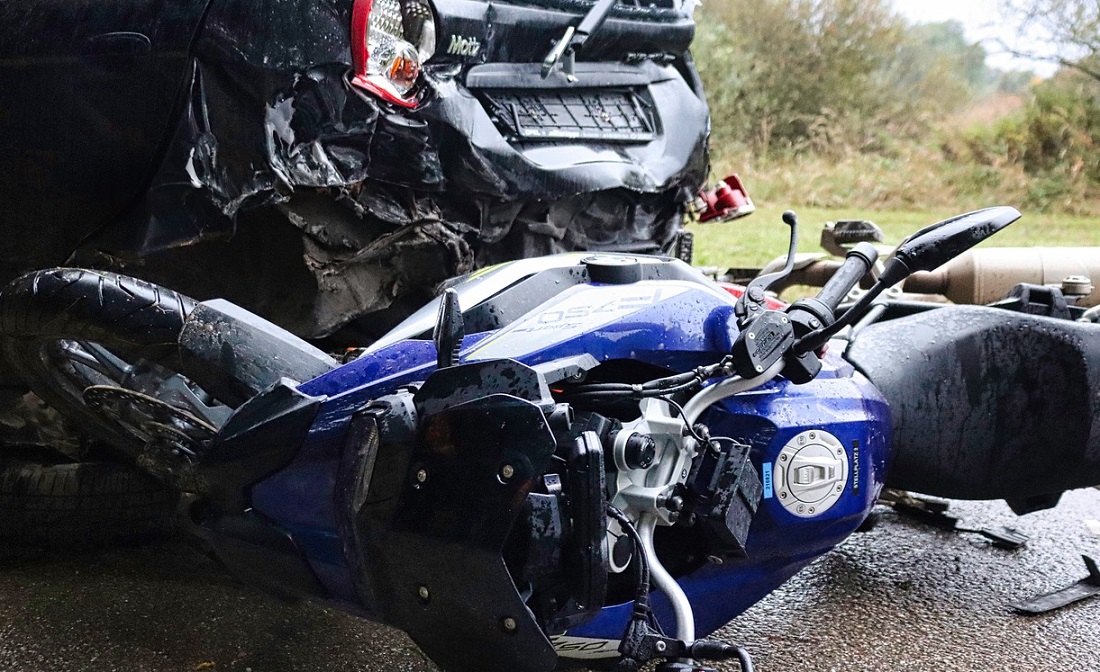
Motorcycle accidents in Indianapolis can result in serious injuries, significant medical costs, and difficult legal questions about who is responsible. Unlike car accident claims, motorcycle injury cases often face additional scrutiny from insurers who may question the rider’s behavior or minimize the severity of the crash. This blog covers how motorcycle accident claims work in Indiana, what the law says, and when speaking with an attorney may help.
What Should You Do After a Motorcycle Accident in Indianapolis?
After a motorcycle accident in Indianapolis, you may be able to pursue compensation for medical costs, lost income, and other losses if another party’s negligence caused the crash.
- Indiana law gives injured riders two years from the date of the crash to file a personal injury claim. (Indiana Code § 34-11-2-4)
- Motorcyclists face a fatality rate nearly 28 times higher than passenger car occupants per mile traveled, according to NHTSA data.
- Indiana recorded 112 motorcyclist fatalities in FFY 2024, with operator impairment and improper licensing among the most common contributing factors.
- Insurance companies often dispute liability in motorcycle cases, sometimes arguing the rider was at fault even when another driver caused the crash.
- Indiana’s modified comparative fault rule allows injured riders to pursue compensation even if they share some responsibility, as long as their fault does not reach 51%.
Each case is different. Speaking with a motorcycle accident lawyer in Indianapolis can help clarify your options and protect evidence before it is lost.
What Should Indianapolis Motorcycle Accident Victims Know Before Filing a Claim?
 Indiana law and insurance practices both affect how motorcycle accident claims unfold, and understanding both early can make a meaningful difference in the outcome.
- Indiana’s statute of limitations gives most injured riders two years from the date of the crash to file a personal injury lawsuit. Missing this deadline typically bars recovery. (Indiana Code § 34-11-2-4)
- Indiana follows a modified comparative fault rule. Riders can still pursue compensation if they are partially at fault, as long as their share of fault is below 51%. (Indiana Code § 34-51-2)
- Insurance adjusters often move quickly after a crash to gather statements. Giving a recorded statement before consulting a lawyer can affect your claim.
- Medical records, crash scene evidence, and witness accounts can disappear quickly. Early legal involvement often helps preserve what matters most.
- Motorcycle riders are frequently assumed to be at fault by other drivers and insurers, even when the evidence does not support that conclusion.
What Do the Numbers Say About Motorcycle Accidents in Indiana?
Indiana and national data consistently show that motorcycle riders face higher risks on the road and that crashes often result in serious injuries.
- Indiana recorded 112 motorcyclist fatalities in FFY 2024, according to preliminary FARS data. Operator impairment and improper licensing were identified as two of the most common contributing factors.
- Per 100 million vehicle miles traveled in 2023, the motorcyclist fatality rate was nearly 28 times higher than the passenger car occupant fatality rate, according to NHTSA.
- Thirty-six percent of motorcycle riders in fatal crashes in 2023 were speeding at the time, compared to 22 percent for passenger car drivers.
- In 43 percent of fatal two-vehicle motorcycle crashes in recent years, the other vehicle was making a left turn while the motorcyclist was traveling straight, according to NHTSA data.
- Indiana crash data is available through the Criminal Justice Institute and reflects statewide trends in motorcycle-involved incidents.
What Is a Motorcycle Accident Claim in Indiana?
A motorcycle accident claim in Indiana is a legal process that allows an injured rider to seek compensation from the party or parties whose negligence caused the crash. It may involve an insurance claim, a lawsuit, or both.
Who Can Be Held Liable in an Indianapolis Motorcycle Accident?
Multiple parties may share responsibility depending on the circumstances of the crash.
 Other drivers are the most common source of liability in motorcycle accidents. Left-turn collisions, failure to yield, distracted driving, and lane changes without checking blind spots are among the most frequent causes when another vehicle is involved.
Government entities may be liable if a poorly maintained road, missing signage, or a dangerous intersection contributed to the crash. In Indiana, the Department of Transportation is responsible for maintaining state and interstate highways. Claims against government entities involve specific procedural requirements and shorter notice deadlines.
Motorcycle manufacturers may be responsible in cases where a defective part or mechanical failure contributed to the crash. This is a separate area of law involving product liability claims, which Hurst Limontes does not handle. If your case involves a defective product, an attorney can help direct you to appropriate counsel.
What Types of Motorcycle Accidents Are Most Common in Indianapolis?
Left-turn collisions, rear-end crashes, and lane change incidents are among the most common motorcycle accident types seen in Indianapolis injury claims.
- Left-turn collisions at intersections where a driver fails to yield to an oncoming rider
- Rear-end crashes where a following vehicle does not leave adequate stopping distance
- Lane change collisions where a driver moves into a lane already occupied by a motorcycle
- Dooring incidents where an opening car door strikes a passing rider
- Road hazard crashes involving potholes, debris, loose gravel, or uneven pavement
Common Causes of Indianapolis Motorcycle Accidents and Potential Liable Parties
| Crash Type | Common Cause | Potentially Liable Party |
| Left-turn collision | Driver fails to yield | Other driver |
| Rear-end crash | Following too closely | Other driver |
| Lane change collision | Driver does not check mirrors | Other driver |
| Road hazard crash | Poor road maintenance | Government entity |
| Mechanical failure | Defective part or service | Manufacturer or mechanic |
What Challenges Do Indianapolis Motorcycle Riders Face After a Crash?
Motorcycle accident claims present specific obstacles that differ from standard car accident cases, and riders who understand these challenges early are often better positioned to protect their interests.
How Do Insurance Companies Handle Motorcycle Accident Claims?
Insurance companies often approach motorcycle accident claims with greater scrutiny than car accident claims. Adjusters may argue that the rider was speeding, weaving, or behaving recklessly, even without evidence to support those conclusions.
Bias against motorcyclists is a documented pattern in personal injury claims. An attorney can work to counter these arguments with physical evidence, witness accounts, and reconstruction analysis rather than allowing the adjuster’s assumptions to shape the outcome.
What Happens When Fault Is Disputed in a Motorcycle Accident?
Disputed liability is common in motorcycle accident cases. Indiana’s comparative fault rule allows a rider to pursue compensation even if they share some responsibility, as long as their portion of fault stays below 51%. (Indiana Code § 34-51-2)
If a rider is found 25% at fault, their total recovery is reduced by 25%. Early investigation that documents the scene, gathers witness statements, and preserves physical evidence can help establish a clearer picture of what actually happened.
Why Do Motorcycle Injuries Often Lead to Larger Claims?
Motorcyclists do not have the structural protection that enclosed vehicles provide. Road rash, fractures, traumatic brain injuries, and spinal injuries are common outcomes even in moderate-speed collisions.
The severity of these injuries often means higher medical costs and longer recovery periods. It also frequently means greater impact on a person’s ability to work and live as they did before the crash, which directly affects the scope of a potential claim.
What Laws and Deadlines Apply to Motorcycle Accident Claims in Indiana?
Both Indiana state law and the specific circumstances of each crash shape what deadlines apply, what evidence matters, and how fault is divided between parties.
How Long Does an Indianapolis Rider Have to File a Motorcycle Accident Lawsuit?
In most cases, Indiana law gives injured riders two years from the date of the crash to file a personal injury lawsuit. Missing this deadline typically eliminates the right to pursue compensation in court, regardless of how strong the underlying claim may be.
Exceptions exist, such as cases involving minors or claims against government entities, which may carry shorter notice requirements. An attorney can determine which deadline applies to a specific situation.
How Does Indiana’s Comparative Fault Rule Affect a Motorcycle Claim?
Indiana’s modified comparative fault system allows injured parties to pursue compensation even when they share some responsibility for the crash. (Indiana Code § 34-51-2) The key threshold is 51%. If a rider’s share of fault reaches that level, they are barred from recovery.
Below that threshold, recovery is reduced in proportion to fault. A rider found 30% at fault in a case worth $100,000 would typically recover $70,000. This rule makes it important to investigate all contributing factors carefully rather than accepting an insurer’s initial fault determination.
Does Indiana Require Motorcyclists to Wear Helmets?
Indiana does not have a universal helmet law for adult riders. However, helmet use or the absence of it may become relevant in a personal injury claim. An insurer may argue that the absence of a helmet contributed to the severity of head injuries, which could factor into comparative fault calculations.
What Compensation May Be Available After an Indianapolis Motorcycle Accident?
When another party’s negligence caused the crash, compensation may reflect the full financial and personal impact of the injuries on the rider’s life.
What Economic Damages May Apply to a Motorcycle Injury Claim?
Economic damages in a motorcycle accident claim typically include medical costs, lost wages, property damage, and future treatment expenses.

These commonly cover:
- Emergency care, hospitalization, surgeries, and ongoing medical treatment
- Future medical costs if injuries require long-term management or rehabilitation
- Lost wages during the recovery period
- Reduced earning capacity if injuries affect a rider’s ability to work at the same level going forward
- Costs to repair or replace the motorcycle and other damaged property
Insurance carriers often present initial offers that do not account for future medical needs or long-term income loss. Understanding the full scope of economic damages before accepting any settlement is often important.
What Non-Economic Damages May Apply?
Non-economic damages reflect harm that does not carry a direct price tag but is recognized under Indiana law. These include physical pain and suffering, emotional distress, and reduced quality of life. In cases involving severe or permanent injuries, these losses can represent a significant portion of a total claim.
What Happens in a Wrongful Death Case Involving a Motorcycle Accident?
Certain family members may pursue a wrongful death claim under Indiana law when a motorcyclist is killed due to another party’s negligence. (Indiana Code § 34-23-1) These claims have their own deadlines and procedural requirements. Speaking with an attorney promptly after a fatal crash helps protect the family’s legal options.
When Is It Worth Talking to an Indianapolis Motorcycle Accident Lawyer?
Speaking with a motorcycle accident attorney is worth considering if any of the following apply:
- You suffered injuries that required emergency care, hospitalization, or ongoing treatment
- The other driver or their insurer disputes fault or denies the claim
- An insurance adjuster has already contacted you and asked for a recorded statement
- You are unsure whether the road, a government entity, or another party may share liability
- You received a settlement offer before completing medical treatment
- A loved one was killed in the crash
The earlier a lawyer reviews the facts, the better the opportunity to preserve evidence, identify all liable parties, and respond to insurer tactics before they shape the outcome of the claim.
Practical Steps Many Motorcycle Accident Claimants Find Helpful
Many riders find the following steps useful in the days after a crash:
- Seek medical attention promptly, even if injuries seem minor at first. Some injuries, including traumatic brain injuries, may not present symptoms immediately.
- Document the crash scene with photographs if it is safe to do so, including road conditions, vehicle positions, and any visible hazards.
- Gather contact information from witnesses before they leave the scene.
- Avoid giving a recorded statement to any insurance adjuster before speaking with a lawyer.
- Keep records of every medical appointment, prescription, and out-of-pocket expense related to the crash.
- Write down your account of what happened while the details are still fresh.
- Request a copy of the police report once it becomes available.
These reflect practices many claimants find useful in the early stages of a motorcycle accident claim. They are not legal advice.
Ask Hurst Limontes
What if the other driver says the motorcycle accident was my fault?
This is one of the most common situations in motorcycle accident cases. Indiana’s comparative fault rule allows you to pursue compensation even if you share some responsibility, as long as your portion of fault stays below 51%. An attorney can investigate the crash independently, gather physical evidence and witness accounts, and work to counter fault arguments that are not supported by the facts.
Can I still make a claim if I was not wearing a helmet at the time of the crash?
Possibly, yes. Indiana does not require adult riders to wear helmets. However, an insurer may argue that the absence of a helmet contributed to the severity of head or brain injuries, which could affect how fault is calculated. An attorney can assess how helmet use may factor into your specific claim and work to counter arguments that attempt to shift responsibility unfairly.
How do I know if road conditions contributed to my crash?
Road hazards such as potholes, loose gravel, missing signage, or uneven pavement can contribute to motorcycle accidents. If a government entity was responsible for maintaining that roadway, they may share liability.
These claims involve specific procedural requirements and shorter notice deadlines than standard personal injury claims. An attorney can review the circumstances and determine whether a road defect may be part of your case.
What if the at-fault driver did not have enough insurance to cover my injuries?
In Indiana, your own uninsured or underinsured motorist coverage may apply when the at-fault driver’s policy does not fully cover your losses.
The availability and scope of this coverage depends on your own policy terms. An attorney can review the insurance picture on both sides and help identify all available sources of compensation.
Indianapolis Motorcycle Accident Questions Answered by Attorneys
Can a passenger on a motorcycle file a claim after an accident in Indiana?
Yes. Motorcycle passengers who are injured in a crash may pursue claims against the at-fault driver and, in some circumstances, against the motorcycle operator as well. Passengers typically do not carry fault for a crash in the same way that operators might, which can simplify the liability analysis in their case.
What if the motorcycle accident involved a commercial vehicle or truck?
When a commercial vehicle is involved in a motorcycle crash, liability may extend beyond the driver to the trucking company, cargo loaders, or maintenance contractors. These cases often involve federal motor carrier regulations and additional evidence that does not exist in standard car accident claims. Early legal involvement is often particularly important in these situations.
Is it possible to pursue a claim if the crash happened because a car door opened into my path?
Yes. Dooring incidents, where an opening vehicle door strikes a passing motorcyclist, can support a negligence claim against the driver or passenger who opened the door without checking for approaching traffic. These cases benefit from scene documentation and witness accounts gathered as early as possible.
How long does a motorcycle accident case typically take to resolve in Indiana?
The timeline varies depending on the severity of injuries, whether liability is disputed, and whether the case resolves through settlement or litigation. Cases involving serious injuries often take longer because understanding the full scope of medical treatment and long-term costs before settling is typically advisable. An attorney can give a more specific assessment based on the facts of a particular case.
Does Indiana’s helmet law affect how much compensation a rider can recover?
Indiana does not have a universal helmet requirement for adult riders, but the absence of a helmet can become a factor in how fault is assigned. An insurer may argue that not wearing a helmet contributed to the severity of head or brain injuries. Whether this argument succeeds depends on the specific facts of the case. An attorney can assess how helmet use may affect a particular claim under Indiana’s comparative fault rules.
You Have Questions. We Work to Get You Answers.

William Hurst, Motorcycle Accident Attorney
The days after a motorcycle crash can feel uncertain. Medical bills arrive before you know the full extent of your injuries. Insurance adjusters call before you have had time to understand what happened. And the legal process can feel difficult to navigate on your own.
At Hurst Limontes, we work with injured riders and their families across Indiana to investigate motorcycle accident claims, identify every party whose conduct may have contributed to the crash, and pursue the full recovery the situation may allow. We handle motorcycle accident cases on a contingency fee basis, which means no legal fees unless we recover for you.
We offer free consultations. Call us at (317) 636-0808 or visit us online. No pressure. No obligation.